Card Grading Explained: PSA vs BGS vs CGC
Card grading turns a loose card into a sealed, numbered slab with a grade from 1 to 10 printed on the label. That one number can multiply a card’s value, or tell you it is worth about the same raw. This guide explains how card grading works, how PSA vs BGS vs CGC compare, what each grade means, and how to decide whether a card is worth sending in at all.
We stock thousands of slabs at Phantum Nine, so we see the same questions every week. The short version: PSA is the most liquid, BGS gives you subgrades, and CGC is often the best value for modern cards. The long version is below.
Table of contents
What is card grading?
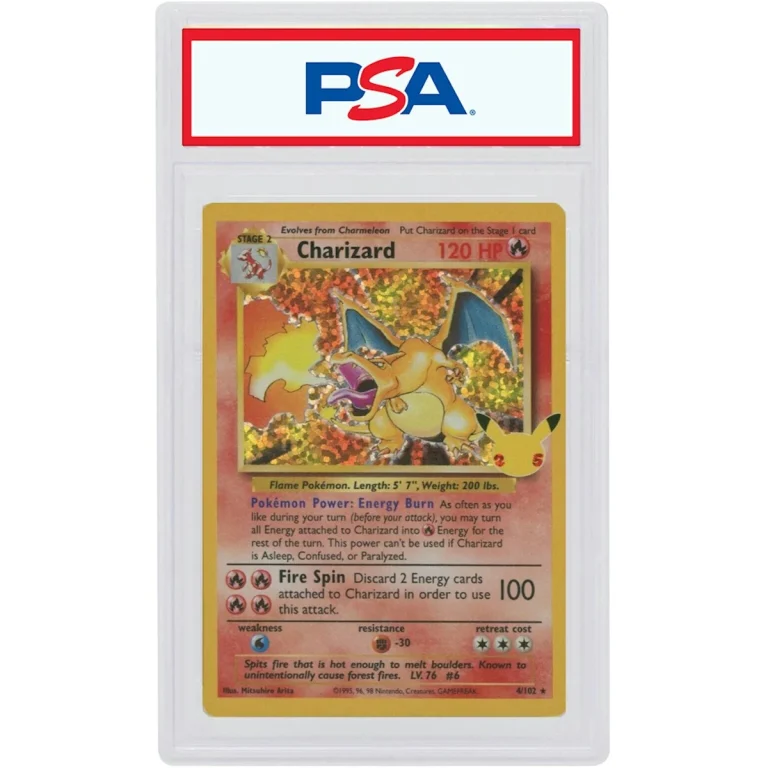
Card grading is a paid service where an independent company inspects a trading card, assigns it a condition grade, and seals it in a tamper-evident plastic holder called a slab. The label shows the card’s name, set, number, the grade, and a unique certification number you can look up online.
In card grading, graders judge four things: centering (how evenly the borders frame the artwork), corners, edges, and surface (scratches, print lines, dents, whitening). A card with sharp corners, clean edges, a flawless surface and near-perfect centering earns the top grade. One soft corner or a faint scratch can drop it a full point.
Card grading does two jobs at once. It protects the card, and it gives buyers a trusted, third-party opinion of condition. That second part is why a PSA 10 often sells for several times the price of the same card raw: buyers no longer have to judge condition from photos.
PSA vs BGS vs CGC: the main grading companies
Three companies handle most card grading in the US market. Each uses a 1–10 scale, but they differ in labels, subgrades, and how much collectors pay for their slabs.
PSA (Professional Sports Authenticator)
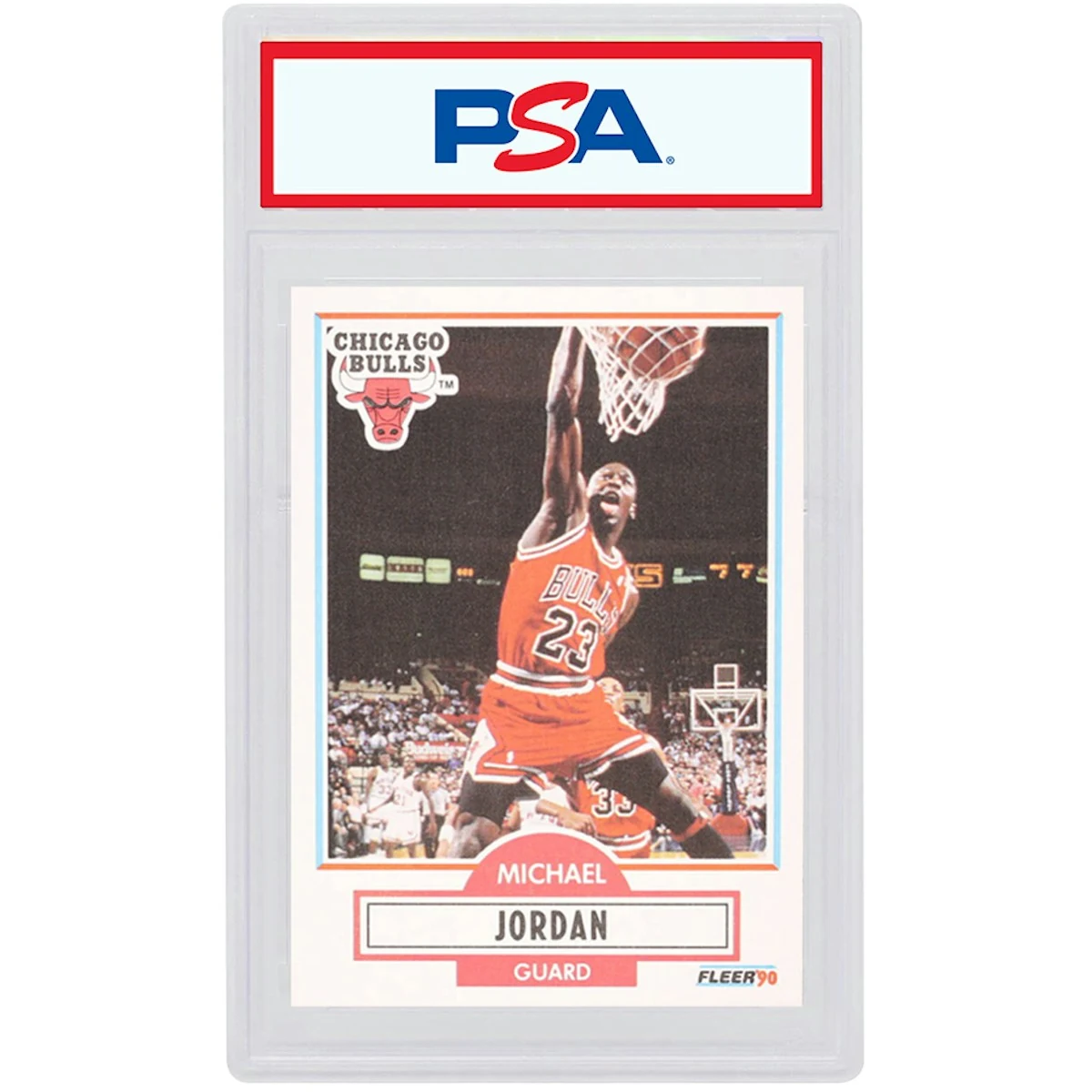
PSA is the largest and oldest of the three. Its red-and-white label is the default for sports cards and vintage Pokémon, and PSA slabs usually sell for the highest prices at the same grade. The top grade is PSA 10 Gem Mint, followed by 9 Mint and 8 Near Mint–Mint.
PSA gives a single overall grade with no subgrades. That keeps things simple: buyers compare one number. PSA also publishes a population report showing how many copies of each card have earned each grade, which helps you judge rarity.
BGS (Beckett Grading Services)
Beckett grades on the same 1–10 scale but prints four subgrades on the label: centering, corners, edges and surface. The overall grade is built from those four. Subgrades show exactly where a card lost points, which serious collectors value.
Beckett’s labels tell you a lot at a glance. A BGS 9.5 Gem Mint is the grade most comparable to a PSA 10. A BGS 10 Pristine is harder to get, and the rare Black Label means all four subgrades are a perfect 10, which can sell for far more than any other grade of the same card.
CGC Cards
CGC came to trading cards from comics and has grown fast in Pokémon and other games. Its slabs are clear and sturdy, turnaround has often been quicker, and fees tend to be lower. CGC separates a Pristine 10 from a Gem Mint 10, so read the label carefully when comparing prices.
CGC slabs usually sell for less than PSA at the same number, but the gap is smaller for modern Pokémon and One Piece cards than for vintage sports cards.
Other companies
SGC is popular for vintage sports cards and has a clean black “tuxedo” label. TAG and a few newer graders use computer imaging. They are worth knowing about, but most resale demand still sits with PSA, BGS and CGC.
The card grading scale explained
Every company words its labels a little differently, but the scale reads roughly the same way:
- 10 (Gem Mint / Pristine): essentially perfect to the naked eye. Four sharp corners, clean edges, no surface flaws, centering within tight limits.
- 9 (Mint): one very minor flaw, such as slight off-centering or a tiny print spot.
- 8 (Near Mint–Mint): a couple of small flaws: light corner wear or minor edge whitening.
- 7 (Near Mint): visible but light wear on corners or edges.
- 5–6 (Excellent): clear wear, rounding corners, maybe light scratches.
- 1–4: heavy wear, creases, stains or damage. Still useful for authenticating rare vintage cards.
Half grades exist at most companies (for example 8.5). The jump in value between grades is not linear. For modern cards, the difference between a 9 and a 10 is usually much bigger than between an 8 and a 9, because so many modern cards come out of the pack in near-perfect shape.
PSA vs BGS: which slab sells for more?
For most cards, a PSA 10 sells for more than a BGS 9.5, and often more than a BGS 10 as well. Buyers know the PSA label, and PSA’s huge population of graded cards makes prices easy to compare.
BGS wins in two cases. The first is the Black Label: a card with four perfect subgrades is extremely scarce and commands a big premium. The second is collectors who care about subgrades, such as a 9.5 with a 10 for centering, which some buyers prefer over a plain PSA 10.
When people compare PSA vs BGS for resale, the honest answer is that PSA is safer for selling quickly and BGS is better if you think the card could be perfect. If you plan to keep a card in your own collection, choose the slab and label you like looking at.
Is card grading worth it?
Card grading costs money and time, so it only makes sense when the graded value comfortably beats the raw value plus fees and shipping. Ask three questions before you send a card in.
1. Is the card valuable enough?
Look up recent sold prices for the card raw and in PSA 9 and PSA 10. If a PSA 10 sells for only a little more than the raw card, grading will lose you money once you pay the fee and shipping both ways.
2. Can it realistically get a 9 or 10?
Check centering first: compare the left and right borders, then top and bottom. Then look at the corners and edges under a bright light, and tilt the card to catch surface scratches. Be honest. A card that looks “pretty good” usually grades 7 or 8.
3. Do you want to sell it, or keep it?
If you plan to sell, PSA usually returns the most money. If you are keeping the card, grading still protects it and confirms it is genuine, which matters for expensive vintage cards and popular chase cards that are often faked.
A pre-grading checklist you can do at home
You do not need special tools to sort the cards worth grading from the ones that are not. A few minutes of card grading practice at home saves real money. A bright desk lamp, a clean surface and a phone camera are enough. Work through this list for every card before you pay a grading company.
- Wash and dry your hands. Skin oils leave marks that show up under a grader’s light.
- Check centering on the front. Compare the left border with the right, then the top with the bottom. PSA describes a Gem Mint card as roughly 55/45 to 60/40 or better on the front. If one border is clearly thicker, expect a 9 at best.
- Check centering on the back. The back is allowed to be further off, but badly shifted backs still cost points.
- Look at each corner up close. Use your phone’s zoom. Any white dot or soft, rounded tip means the card will not get a 10.
- Run your eye along every edge. Edge whitening on the back is the most common flaw on modern cards.
- Tilt the card under the light. This reveals scratches, print lines, dents and fingerprints on holo and full-art surfaces.
- Write down what you see. Keep notes per card. When the grades come back, compare them with your notes and you will get better at predicting grades.
Cards that pass every step are your best grading candidates. Cards with one small flaw may still be worth it if a 9 sells well. Cards with several flaws are usually better kept raw or sold as they are.
How to read a graded card label
A slab label packs a lot of information into a small space. Reading it properly helps you compare listings and avoid paying a top-grade price for a lower grade.
- Year, brand and set: identifies the exact release, such as 2023 Pokémon Scarlet & Violet 151 or 1990 Fleer.
- Card name and number: make sure the number matches the version you want. Reprints and promos often share a name with the original.
- Variety notes: words like Holo, Reverse Holo, 1st Edition, Shadowless or a stamp change the value a lot.
- Grade and descriptor: the number plus a word such as Gem Mint or Mint. BGS labels add four subgrades below the main grade.
- Certification number: the unique ID you look up on the grading company’s website.
Qualifiers are another detail to watch. Some labels note an issue such as off-centering or a marked card next to the grade. A qualified grade sells for much less than a clean one, so read the whole label, not just the number.
Card grading for Pokémon, sports and One Piece
Collector habits differ by category, and that changes which card grading service makes sense.
Sports cards: PSA dominates, with BGS strong for modern rookies and autographs and SGC respected for vintage. For high-end sports cards, the PSA label is usually worth the extra cost. See our sports cards for graded rookies and stars.
Pokémon: PSA leads on resale, but CGC and BGS are both popular, especially for modern full-art cards. Japanese Pokémon cards grade well because the print quality is often excellent. Browse Pokémon cards for graded and sealed options.
One Piece and other games: grading is newer here, so prices are still settling. PSA 10 copies of popular One Piece alternate-art cards carry strong premiums, and CGC is common too. Our One Piece Card Game range includes both slabs and sealed boxes.
How to submit cards for grading
Every grading company has its own online submission form, but the card grading steps are the same:
- Create an account on the grader’s website and choose a service level. Cheaper tiers take longer and often cap the declared value per card.
- List each card with its year, set, number and your declared value.
- Put each card in a penny sleeve, then a semi-rigid card holder (many graders prefer these over hard toploaders).
- Pack the holders tightly between two pieces of cardboard so nothing can slide, and ship with tracking and insurance.
- Track the order online. When it is graded, you pay any balance and the slabs ship back to you.
For card grading on a budget, group submissions through a local card shop or a submission service can save money on lower tiers, but you give up some control over timing.
Buying graded cards instead of grading yourself
Card grading your own collection is a gamble: you pay the fee before you know the grade. Buying a card already graded removes that risk, because you see the exact grade before you pay. For many collectors, especially those chasing one specific card, buying the slab is cheaper than buying several raw copies hoping one comes back a 10.
When you buy a slab, always check three things:
- The certification number. Look it up on the grader’s website. The card, grade and label details should match the slab in front of you.
- The case. Look for cracks, a lifted seam or a label that looks reprinted. A tampered slab is a red flag.
- The card itself. Labels can be swapped into fake cases. The card should match photos of real copies of the same card.
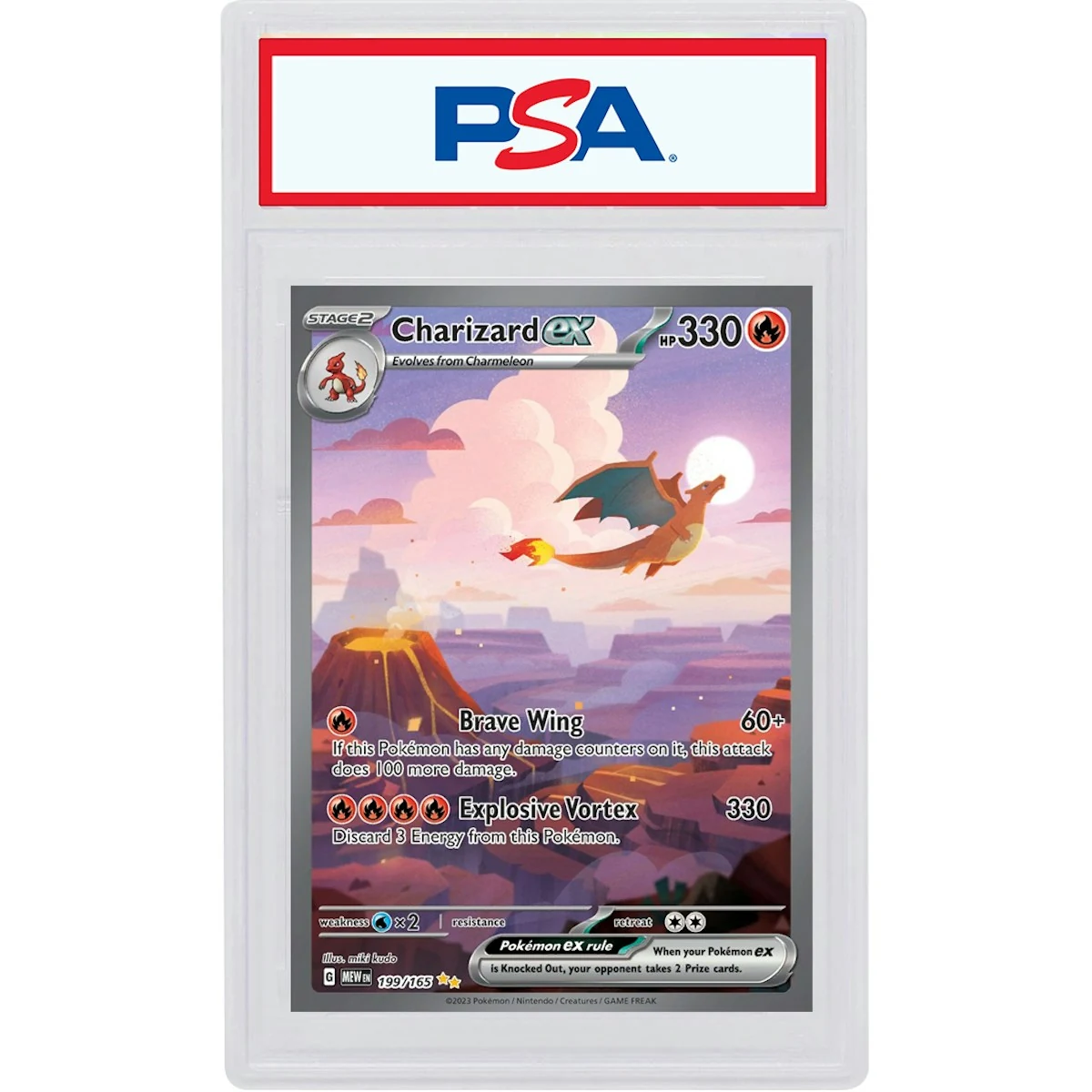
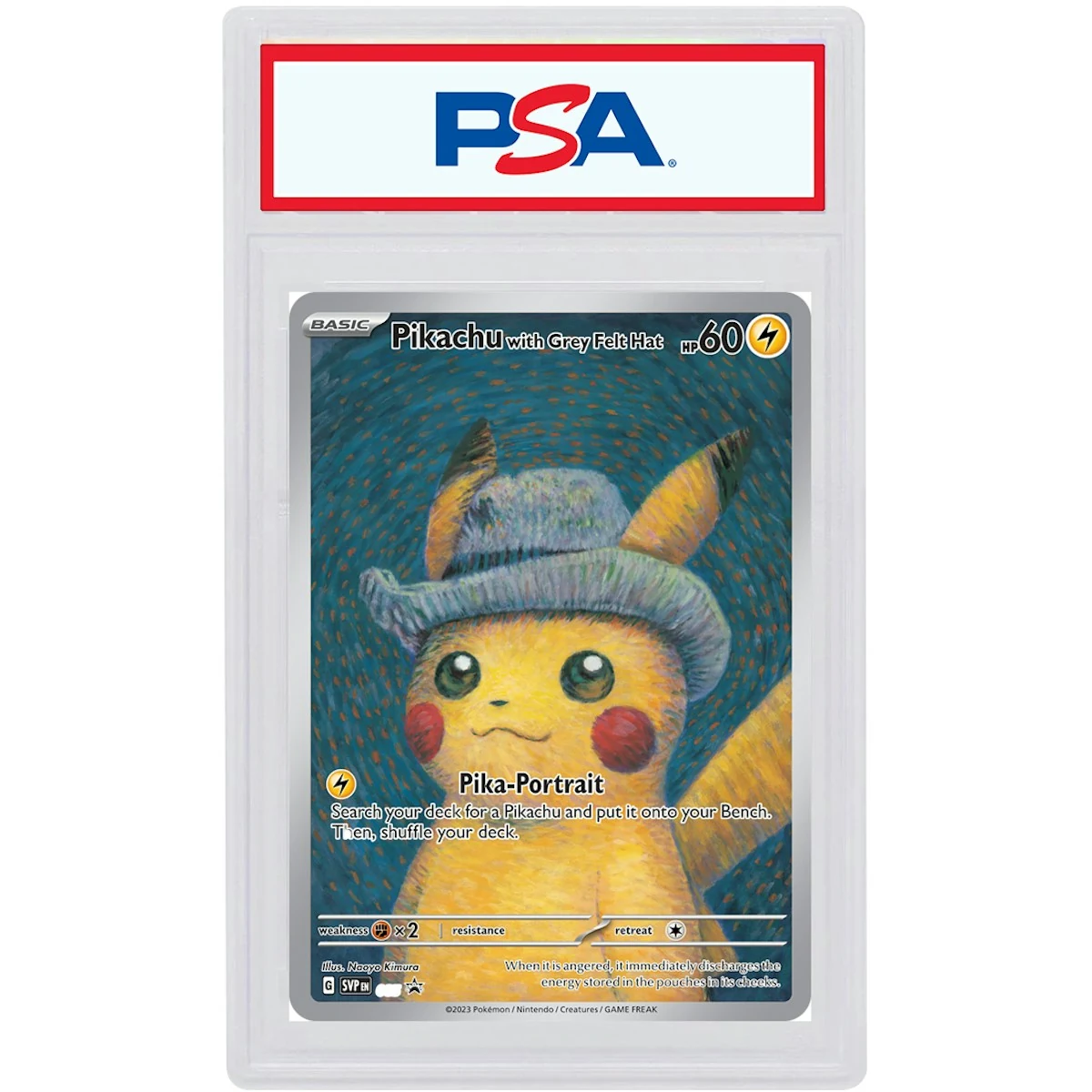
You can browse our graded singles, including Pokémon chase cards like the Charizard ex 151 Special Illustration Rare and sports icons like the 1990 Fleer Michael Jordan. Every slab ships in protective packaging, and the grade is confirmed before it leaves our warehouse.
Common card grading mistakes
- Grading cards worth less than the fee. Bulk rares rarely pay off, even in a 10.
- Skipping the centering check. Off-center cards cannot get a 10, no matter how clean the corners are.
- Cleaning cards with the wrong materials. Wiping fingerprints with a dry microfiber cloth is fine. Liquids and paper towels can scratch the surface.
- Loose packing. Cards that slide inside the package can ding a corner on the way in.
- Chasing the cheapest tier for valuable cards. Low tiers often cap the declared value, and upgrades later cost more.
Card grading FAQ
Which grading company is the best?
For resale value, PSA is the best choice for most cards. BGS is best when you want subgrades or think a card could earn a Black Label. CGC is a strong, lower-cost option for modern cards you plan to keep.
Is a BGS 9.5 the same as a PSA 10?
They are both called Gem Mint, but they are not equal on the market. A PSA 10 usually sells for more. A BGS 9.5 with high subgrades can come close.
Can a graded card be regraded?
Yes. You can “crack” a slab and resubmit the raw card, or send the slab itself to another company for a crossover review, where it is reslabbed only if it meets a minimum grade you choose.
How long does card grading take?
It depends on the company and the service level. Faster tiers cost more per card. Check each grader’s website for current turnaround times before you submit.
Do Japanese Pokémon cards grade well?
Yes. Japanese cards often have better centering and cleaner surfaces than English prints, so they can be strong grading candidates.
Final thoughts
Card grading is worth it when a card is valuable, in excellent shape, and likely to earn a 9 or 10. PSA gives the strongest resale, BGS gives the most detail, and CGC gives good protection at a lower cost. If you would rather skip the wait and the risk, buying a card that is already graded lets you pick the exact grade you want.
New to card grading, or have a question about a slab you are considering? Contact us at support@phantumnine.com and we will help you compare grades and labels before you buy.